Share Judy Waldman Kugelmass's obituary with others.
Invite friends and family to read the obituary and add memories.
Stay updated
We'll notify you when service details or new memories are added.
You're now following this obituary
We'll email you when there are updates.
Select your format and elements to print
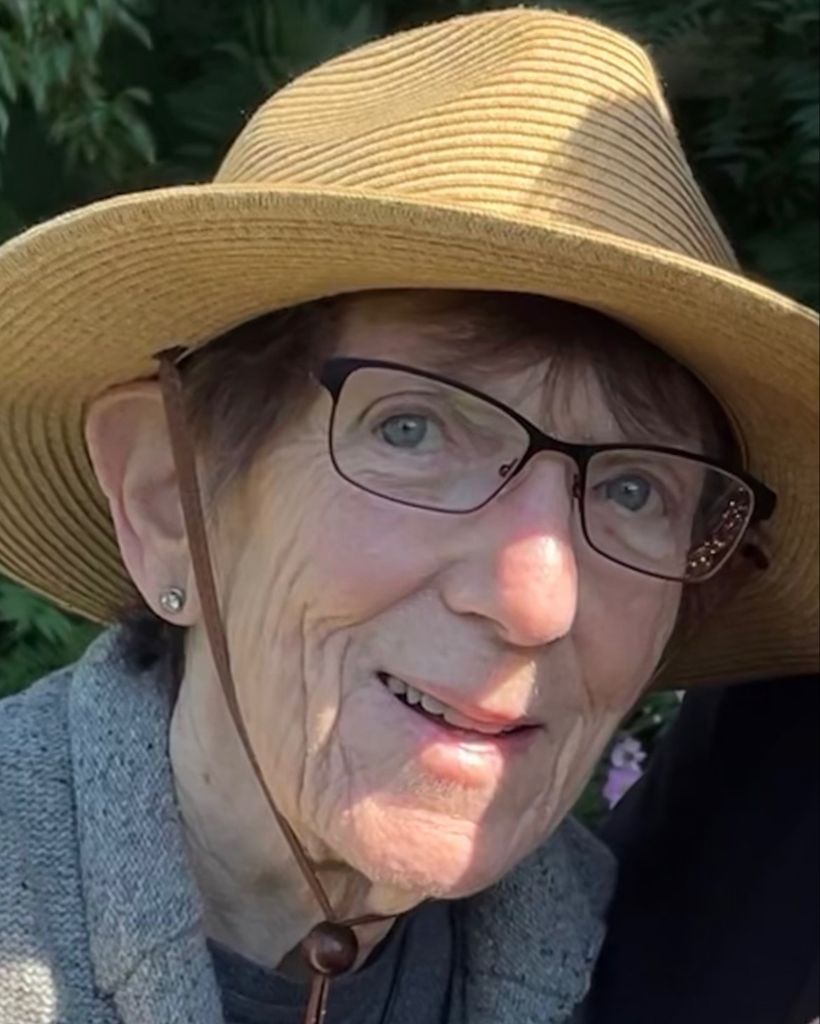
Judy Waldman Kugelmass
Oct 13, 1942 — Dec 18, 2025
Ithaca, NY
Judy Waldman Kugelmass passed away quietly in her sleep on December 18, 2025, in Ithaca, NY where she lived full-time since 2020 when she was first diagnosed with Parkinson’s Disease. Judy sometimes joked, “Mr. Parkinson is a tricky guy who reminds me he’s there if I forget.” But her sense of humor belied the suffering that dominated the last five years of her life. It was a difficult and painful time for Judy and everyone who knew and loved her. In the final months of her life, she was compassionately cared for by Jessica, LaToia, Henrike, Katrina, and Margaret. We are forever grateful to them.
Judy was the beloved wife of Harold Kugelmass; mother of Eve Kugelmass Austin (Douglass) and Noam Kugelmass (Laura Efros); sister of Harvey Waldman (Camilla Toniolo) and the late Joel Waldman (Jania); grandmother of Anna, Ezra, and Nora; sister-in-Law and aunt of many; and friend, colleague, and teacher to many around the world. Her funeral was a private ceremony, officiated by family friend Rabbi David Regenspan and attended by her immediate family.
Judy was born in The Bronx, NY, on October 13, 1942. She was a city kid who rode the subways and found fun and adventure with best friends Millie and Carol. Childhood summers spent fishing and swimming in White Lake, NY, profoundly influenced her life. Seventy years later, Judy loved her Cayuga Lake retirement house. She had a joyous return to lake life and was the Captain of her own boat, retrofitted for her mighty five-foot stature.
Judy’s lifelong work ethic came from her parents Mo and Hilda Waldman (Horowitz) and her ancestors before them, who lived through the legacy of antisemitism and its countless manifestations. Much of her youth was spent either working in the family candy store—one of her duties was monitoring the magazine rack and shooing away boys who browsed the comics and magazines without buying—or helping at home in the family apartment where she lived with her parents, her brothers Joel and Harvey, and her grandmother Anna with whom she shared a bedroom.
Judy learned early on that it took hard work to overcome life’s misfortunes, a lesson reinforced by her father’s stories of how his college education was cut short during the Great Depression and her mother’s stories of how her family kept her from attending college because they needed her math skills for the family business. In an era when girls’ and women’s voices weren’t often heard, Judy knew having the independence to choose what she’d do with her life was her own responsibility, and that education would enable her choices.
Judy’s youth in The City was fueled by her love for the arts, especially music and storytelling. Judy was awestruck when she saw the original Broadway production of West Side Story. She bought the cast-recorded album immediately after the show and listened to it endlessly. Her love of song remained to the end. Three nights before her passing, Judy faintly hummed, “Oh Dreidel, Dreidel, Dreidel,” when she saw a menorah lit up in her room on the first night of Hanukkah.
Judy wasn’t encouraged to go to college, so she forged her own path and enrolled at City College (CCNY) where she met the love of her life. She first saw Hal sitting near her in an Eighteenth-Century English literature course, at the back of a lecture hall with hundreds of students, working on a crossword puzzle instead of taking notes. She recognized a kindred spirit who knew how to keep his mind engaged while marching to the beat of his own drum. Soon after they met, Judy and Hal discovered another shared desire: to leave city life as soon as they graduated from college, and to get as far away as possible from where they grew up.
Judy and Hal eloped and were married on August 16, 1963. Their daughter Eve was born the following Spring, and not long after they moved to Eugene, OR, where Judy received an MS in Counseling, (and Hal got his PhD) at the University of Oregon. It was one of dozens of places where Judy lived, learned, and left her mark. Her love of overseas travel began in 1968 when she, Hal and Eve spent much of the summer in Greece, Turkey, and Israel. This was around the same time they returned to the East Coast and lived in Buffalo, NY, where their son Noam was born in 1969, and less than one year later they moved back out west to San Luis Obispo and Morrow Bay, CA. There Judy loved the climate and the ocean. She was involved in anti-war activism and took the kids with her when she went door-to-door handing out pamphlets, Eve on foot and Noam in stroller.
Starting in the early ‘70s, Judy and family lived in Sullivan County, NY, near her childhood summer home in the Catskills. This is when Judy’s work, her longing for social justice, and her commitment to her own and others’ education completely overlapped. She worked as a school psychologist for over five years, helping children with cognitive and physical disabilities exacerbated by other life challenges. Judy witnessed the discrimination faced by atypical children and their families, and how much worse it was for families living in poverty.
This is also when Judy and her family had an epic adventure: they bought a shuttered 45-acre dairy farm on Robisch Hill in Callicoon, NY. The rebel with a cause, her partner in crime, and their two young kids started an organic vegetable farm. It was hard work in a beautiful place. The farm had an expansive two-mile view across a valley, facing northwest towards another steep hill with two other farms on it. The top half of their hilltop farm had rocky fields, below that was a forest of hemlock and mixed hardwood, and the North Branch Creek was at the bottom where they swam and fished.
Judy’s iconoclastic spirit leaves its own legacy with friends, colleague, students and, most of all, her family. Among many other things, she imbued Eve and Noam with the love of good pop songs, a sharp wit, and an appreciation for a clever turn of phrase, especially if it spoke to her political philosophies. Two favorites were “Label Jars Not People,” and “Question Authority.” Judy always had a big grin whenever she used pop-culture expressions to affirm her beliefs. “Try it, you’ll like it!” was her usual response whenever Noam protested, “I don’t want to!” Judy knew she was on the right track when, after years of teaching her kids that boys and girls should all be able, and sometimes required, to do the same things, Eve insisted that her five-year-old little brother learn how to cook, too. It’s no coincidence that Judy’s son and son-in-law became the designated cooks for their own families.
As the ‘80’s approached, Judy entered a Doctoral program in Special Education at Syracuse University and solidified her life-long commitment to being an education champion for marginalized populations. She was thrilled to work at the Jowonio School, a pioneering institution that set the gold standard for inclusive education and continues its mission to this day. It inspired Judy’s research examining the conditions of a public school for children with physical and developmental disabilities along with the so-called “emotionally disturbed” children—mostly Black boys—who were restless, distracted and oftentimes labeled as “troublemakers.” Her dissertation was a critical assessment of an elementary education system that wouldn’t adapt its standards to accommodate children’s needs, let alone try alternatives to typical teaching methods. It looked at a commonly destructive education paradigm and contrasted it with alternatives that demonstrated how “unteachable” children could learn, do hard work, and grow into happy, healthy, and productive members of society. Nearly two decades after successfully defending her dissertation, she adapted it into a college textbook and published The Inclusive School: Sustaining Equity and Standards.
Judy’s post-doctoral career began in Ithaca, NY, first as a psychologist at The Special Children’s Center (formerly Franziska Racker Centers, now Racker) and then as its Program Director, and she subsequently started her college teaching career at Cornell University’s College of Human Ecology. Judy went on to teach at Hobart and William Smith Colleges, and finally SUNY Binghamton where she retired as Associate Professor Emerita.
Judy and Hal became empty nesters in 1988 and eagerly got back to country living in Interlaken, NY, just outside of Ithaca. They returned more modestly to “farm life” and enjoyed a sensibly-sized, quarter-acre flower and vegetable garden on a 50-acre property, spending long summer days swimming in their pond, staying busy with their teaching jobs, and hosting many visitors, including long stays by their children and grandchildren.
The last 25 years of Judy’s career became more diverse and rewarding with time. She was a Fullbright Scholar, spending summer months throughout Southeast Asia, and winter months in parts of the former Soviet Union. She lived and worked for full semesters in Portugal, the UK, and India, and had short stints in Africa, Central America, and Cuba. Hal often joined Judy for parts of her time overseas and, after he retired, they lived together in Manchester, England. Their partnership and experience at the time, during the Gulf War, is well captured in a photo of them holding up protest signs at an anti-war march.
Paradise Park, on the rainy side of the Big Island of Hawaii, was Judy’s springboard into retirement. She and Hal found their tropical version of Interlaken. They had a winter home for over 15 years in a kind of Finger Lakes-meets-the-rainforest. It was easy for them to get acclimated, taking in the land and the ocean while being embraced by “Aloha culture.” Judy naturally identified with Pele, the Hawaiian Islands’ creator-goddess, the deity of fire, volcanoes and lightning. She loved living in a multicultural environment, learning about indigenous Hawaiian culture, its stories, songs and rituals. She even took Hula lessons and respected it as an art form, far more challenging and culturally significant than she had imagined. The novelty of growing tropical plants and flowers was a Hawaiian delight for Judy and Hal, and it was another garden experience they loved sharing.
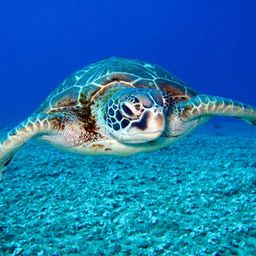
Judy took painting classes, practiced Tai Chi, and couldn’t help but learn about the public schools and connect with local educators blending traditional Western and Hawaiian teaching practices. Judy and Hal hosted dozens of friends and family. Occasionally there were weeks of back-to-back stays, and they were always happy to share their home and show guests the places they never tired of visiting. Judy’s favorite spot was a cove of tidal basins a short walk from their house where she loved snorkeling and the sensation of floating in ever-changing color surrounded by marine life. The sea turtle was her favorite, and it became her muse and the inspiration for her tattoo.
Over the years, “trouble in paradise” and “Pele is pissed” became Judy’s regular refrains as the neighboring Kilauea volcano became increasingly active. If there was ever a divine intervention Judy would recognize, it was when lava covered the house and tide pools so dear to her. She and Hal spent their last two Hawaiian winters in other parts of the Island. The “honeymoon” with Hawaii was over, but they still enjoyed finding new places and revisiting some of their old favorites.
Cayuga Lake was the perfect summer alternative to winter in Hawaii. Sunrises over the east shore brought many days of swimming, boating, kayaking, floating, parties and meals. Judy and Hal had just settled into their lake house in 2013 when they celebrated their 50th Anniversary with a party at Taughannock Park that was worthy of the occasion. It was a joyous day in a beautiful spot with people they knew and loved throughout the many chapters of their life together. There was lots of laughter and music, like at all their parties. It was pure Judy and Hal.
Their peaceful lake life was enhanced with frequent visits from friends and family, grandchildren’s birthday celebrations, and lots of ice cream up the hill at Cayuga Creamery. And Judy always brought out her bins of eclectic toys and books for any kids who visited.
Judy savored the lake, the sound of her wind chimes, splashing waves, the ducks and geese and, most of all, the loons and their complicated songs—funny, lonely, brassy, sad, loud, peaceful—a beautiful mix, just like her.
Winter sunlight reflected on the icy ground as Judy was laid to rest near the bottom of a gentle slope beside a white spruce at Greensprings Natural Cemetery Preserve. In the warmer months, the land transforms into a colorful wildflower meadow.
Judy will remain in our hearts forever.
A Celebration of Judy’s Life will be held on Saturday, June 13, 2026, from 2:00 to 4:00 p.m. at The Foundation of Light, 391 Turkey Hill Road, Ithaca, NY 14850. To view an electronic invitation and RSVP, please click here.
In lieu of flowers, donations can be made in honor of Judy to
Jowonio: https://jowonio.org/give/
The Racker Center: https://www.racker.org
Hospicare: https://www.hospicare.org
Service Schedule
Past Services
Memorial Service
Saturday, June 13, 2026
2:00 - 4:00 pm (Eastern time)
Foundation of Light
Guestbook
Visits: 1099
This site is protected by reCAPTCHA and the
Google Privacy Policy and Terms of Service apply.
Service map data © OpenStreetMap contributors