
Share Barbara Laverne Finlay's obituary with others.
Invite friends and family to read the obituary and add memories.
Stay updated
We'll notify you when service details or new memories are added.
You're now following this obituary
We'll email you when there are updates.
Select your format and elements to print
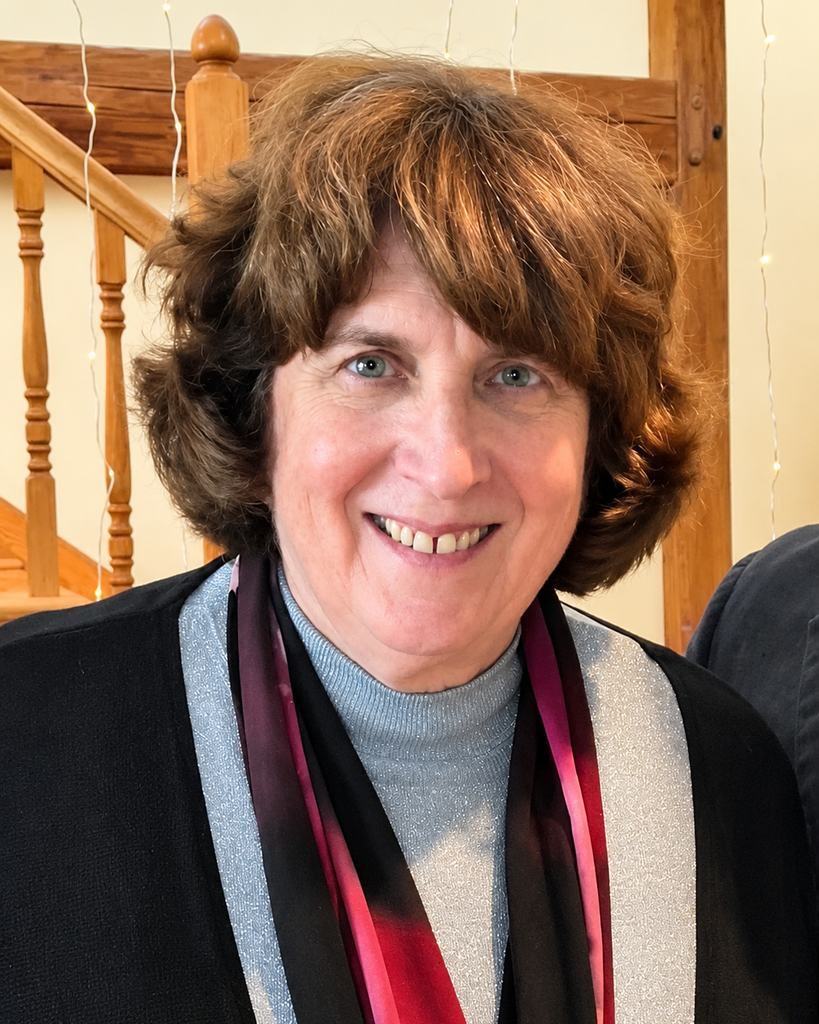


Barbara Laverne Finlay
Oct 25, 1950 — Sep 12, 2026
Newfield, NY
Barbara Laverne Finlay passed away on September 12, 2026 at the age of 75. A member of the Cornell University faculty in the College of Arts and Sciences since 1976, Finlay was widely published and well-respected for her contributions to the field of neuroscience and adored by her family.
Barb was born in Pittsburgh, Pennsylvania to William and Laverne Finlay. She often credited her strong independent streak to being the firstborn, followed less than two years later by twins, Kathy and Bill. Barb received a bachelor’s degree in psychology from Oberlin College in 1972 and a PhD in brain and cognitive sciences from the Massachusetts Institute of Technology in 1976.
Soon after, she began her career at Cornell studying the neurobiological development of the optic nerve, cementing her position by publishing an article in Nature her first year as a junior professor. This would be followed by hundreds of publications, presentations, and collaborations across scientific disciplines during her 40-year tenure at Cornell.
According to her good friend and colleague, Lisa Feldman Barrett, University Distinguished Professor of Psychology at Northeastern University, Barb’s research transformed the scientific understanding of how brains evolve, develop, and scale across species. “To the naked eye, the brains of mice, monkeys, humans, and other mammals appear to contain different parts. This, combined with deeply held beliefs that each brain part had a specific, adaptive function, led to the view that brain evolution occurred piecemeal, with each part shaped by different selection pressures. Instead, Barb’s research showed that mammalian brain regions grow in a highly constrained, predictable manner, following a common developmental plan.” Barb’s work demonstrated that differences in brain structure across species are largely driven by differences in the length of time that different brain segments spend growing and developing. This led to a tool, Translating Time, that clinicians and researchers can use to translate neurodevelopment time across mammalian species, helping to interpret results across model systems and humans. “Barbara also discovered that for much of the brain, the connections between neurons are structured more through experience than from genetic pre-programming,” says Lisa, “helping to explain how brain structure was linked to hunting during the day versus at night, or living in the water versus on land. The same brain plan, when assembled in animals with different ecologies and life histories, produces many different kinds of minds.”
Barb’s impact on the field of neuroscience was echoed by Alexander Ophir, Professor and current Chair of the Psychology Department at Cornell. “Barb was a maverick who challenged the field to think differently and to go beyond simple first principles, or the ‘mode du jour,’ and instead to think deeply about the true roots of brain function,” said Alex. “She was a true visionary, pressuring the scientific community, within and outside of evolutionary neuroscience, forward into new creative and inspired territory.”
In addition to her seminal scientific contributions, Barb was extremely generous with her time and knowledge. She actively sought out collaborations with colleagues in other scientific fields and encouraged multidisciplinary investigations. She impacted the lives of numerous students and colleagues through her mentorship and leadership, serving as Director of Graduate Studies and Chair of the Psychology Department at Cornell. “She was a patient and capable mentor, driven in part by her own curiosity and tenacity to learn,” Lisa notes.
“We have lost an irreplaceable intellectual giant,” said Lucia F. Jacobs, Professor Emerita of Psychology and Neuroscience at the University of California, Berkeley. “I cannot imagine our field without Barb, her wisdom, her humor, her knowledge, her insight into how brains actually develop and evolve.” Lucia also noted Barb’s role in her own scientific career. “I returned to Ithaca a few years after graduating, still not sure about next steps. Barb hired me as her sole technician, someone with very little lab experience, none in neuroscience, and taught me everything.”
“As the department chair when I was hired, Barb was instrumental in giving me a chance to pursue my interests in brain and behavior and to prove myself as a psychologist,” said Shimon Edelman, Professor of Psychology at Cornell. “My own background had been in electrical engineering and computer science. Learning from her over the years helped me build a true intellectual home at Cornell, while her Thanksgiving parties helped my family feel at home in Ithaca.”
David Field, Psychology Professor at Cornell, said Finlay helped bind the psychology department together and offered advice on everything from life as a new faculty member to guidance on obtaining National Institutes of Health grants. “My second year at Cornell, she let me create my own small symposia where I was allowed to invite in 10 of the top people in my field – and they all accepted. It was quite an amazing experience for an assistant professor,” Field said.
In addition to her work at Cornell, Finlay was a fellow of the American Association for the Advancement of Science and the Association for Psychological Science and established the Larry Taylor Lecture series. She was also editor of the journal Behavioral and Brain Sciences for more than 20 years. She retired in 2016. In 2024, she was named the winner of the prestigious Pinkney J. Harman Award for “extraordinary work on evolution of the cortex and the nervous system” by the Cajal Club, an organization dedicated to neuroanatomy.
In addition to this impressive professional resume, Barb was a beloved parent and grandparent. She is survived by her sister, Kathy; son, Will, and his wife, Heather; and Barb’s daughter, Laura, Laura's wife, Casey, and their son, Vaughn. “We knew our mother was an absolute force in her field who was well-respected by her colleagues, but we also knew her at home as a playful and loving parent,” says Laura. She often brought us along on various academic adventures, from the Australian outback to the Amazon River. For her, there was never a line between work and family; she was the same curious, generous person in the field as she was at our kitchen table. As her kids, we always knew that she delighted in our lives, and she will be terribly missed.”
In lieu of flowers, the family requests donations be made in Barb’s honor to Wikipedia or the Finger Lakes Independence Center, two organizations that Barb supported.
Guestbook
Visits: 27
This site is protected by reCAPTCHA and the
Google Privacy Policy and Terms of Service apply.
Service map data © OpenStreetMap contributors